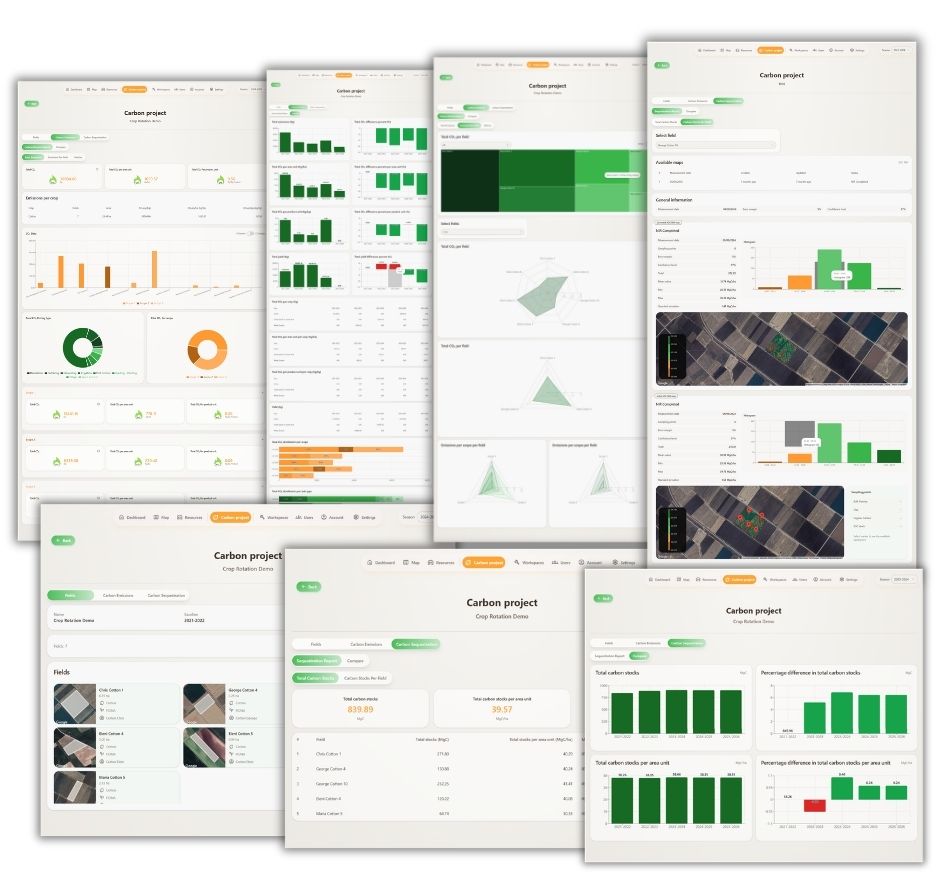
Four Connected Capabilities. One Carbon Intelligence Platform
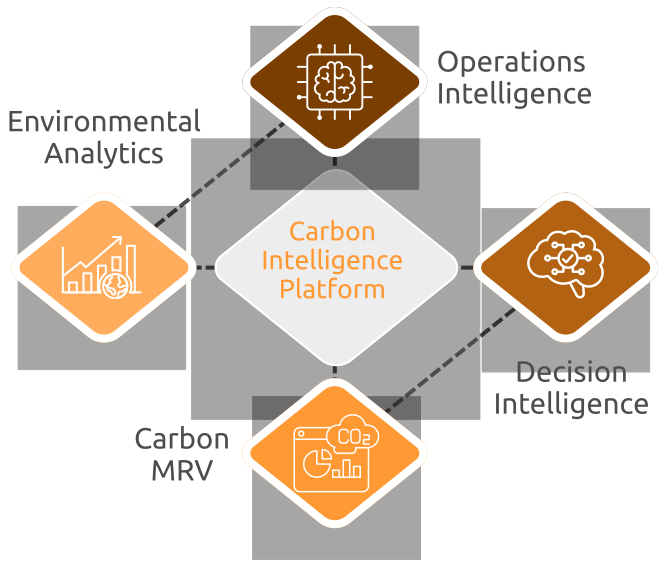
The farmB Carbon Intelligence platform combines four interconnected capabilities that transform agricultural data into operational, environmental, decision and carbon intelligence.
Together, they connect field operations and environmental conditions with data-driven decisions and measurable carbon outcomes, creating a continuous flow from agricultural activity to analysis, action and reporting.
Operations Intelligence
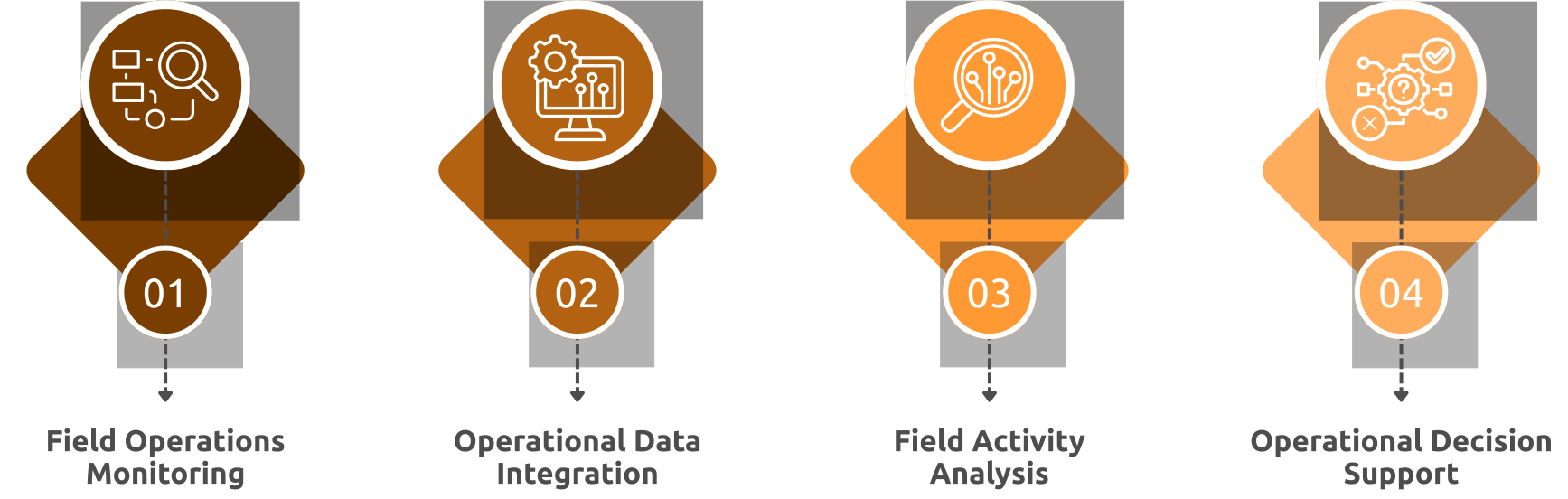
Operations Intelligence enables the monitoring, analysis and optimization of agricultural field operations by integrating operational data, geospatial information and agronomic records, transforming them into structured intelligence that supports more efficient planning, execution and evaluation of field activities and the optimized use of agricultural inputs and resources.
From Field Operations to Operational Intelligence
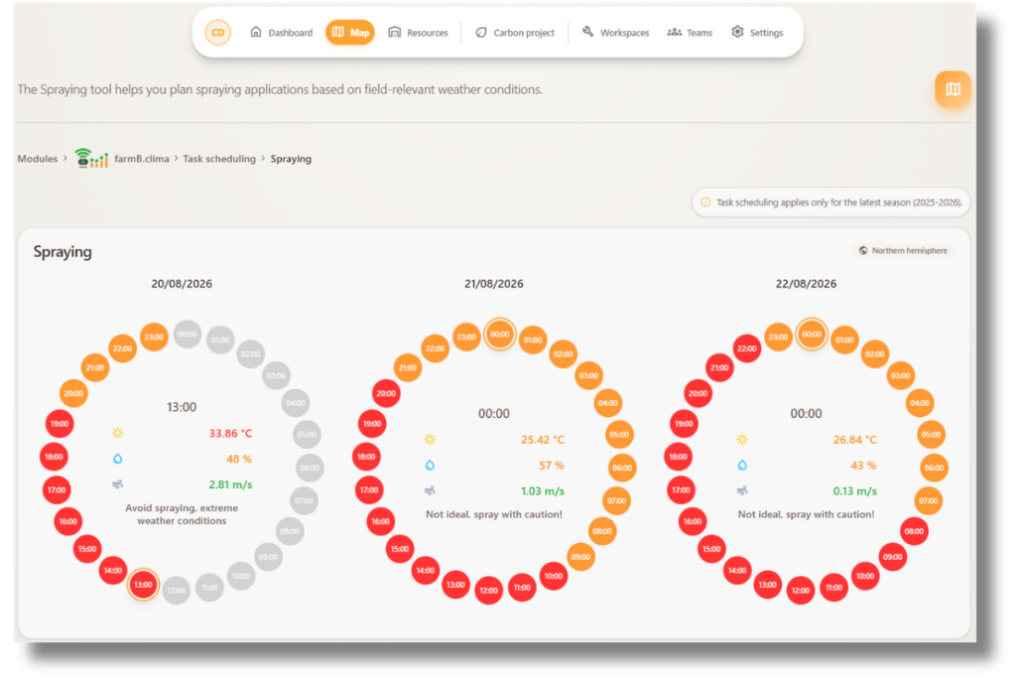
Agricultural production involves multiple interconnected activities, including planting, fertilization, crop protection, irrigation and harvesting, generating information related to task execution, input use, machinery performance and spatial variability. farmB brings these data together within a common operational context, enabling field activities to be monitored, analysed and evaluated over time and transforming fragmented operational records into actionable intelligence for farm management.
Key Functionalities
From Operations to Environmental Performance
Operational efficiency and environmental performance are closely connected. More precise planning and monitoring of field activities can support optimized fertilization, targeted crop-protection applications, improved field logistics and more efficient resource use, while the resulting operational evidence provides an important input for Environmental Analytics and Carbon MRV.
Operational and geospatial data translated into field-level information for planning and implementing agricultural activities.
Environmental Analytics
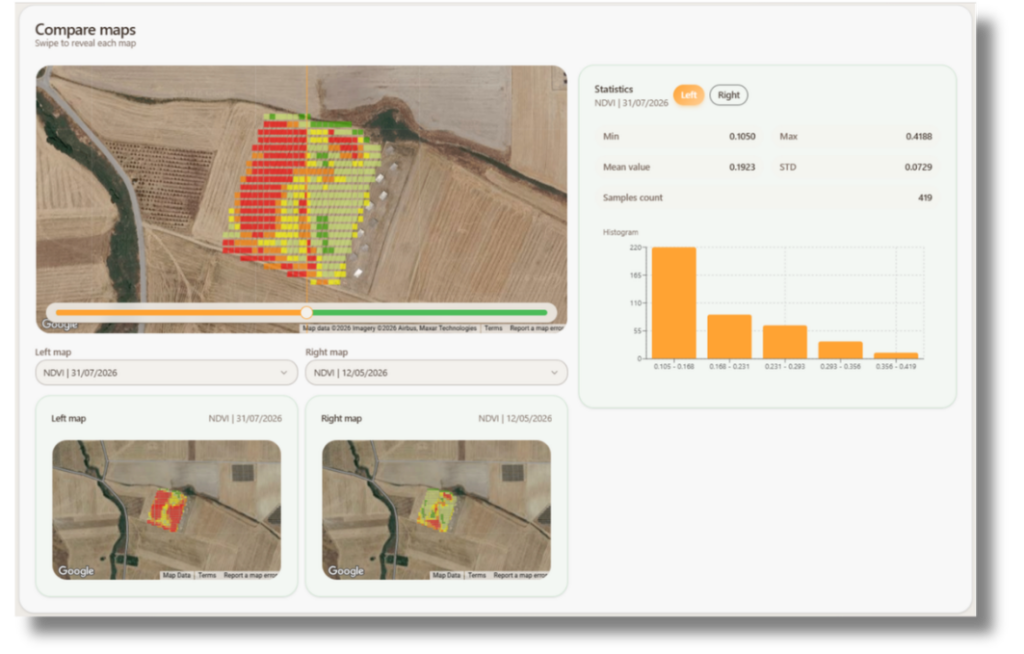
Environmental Analytics provides a structured understanding of environmental conditions and dynamics within agricultural systems by combining soil, crop, weather, geospatial and Earth Observation data. This capability enables farmB to characterize spatial and temporal variability, monitor environmental responses to farming practices and provide the environmental context required for informed management and carbon assessment.
From Environmental Data to Environmental Context
Agricultural environments are continuously influenced by soil properties, crop development, weather conditions and management practices. farmB combines these heterogeneous data sources within a common spatial and temporal framework, transforming individual observations and measurements into field-level information that describes environmental conditions, variability and change over time.
Key Functionalities
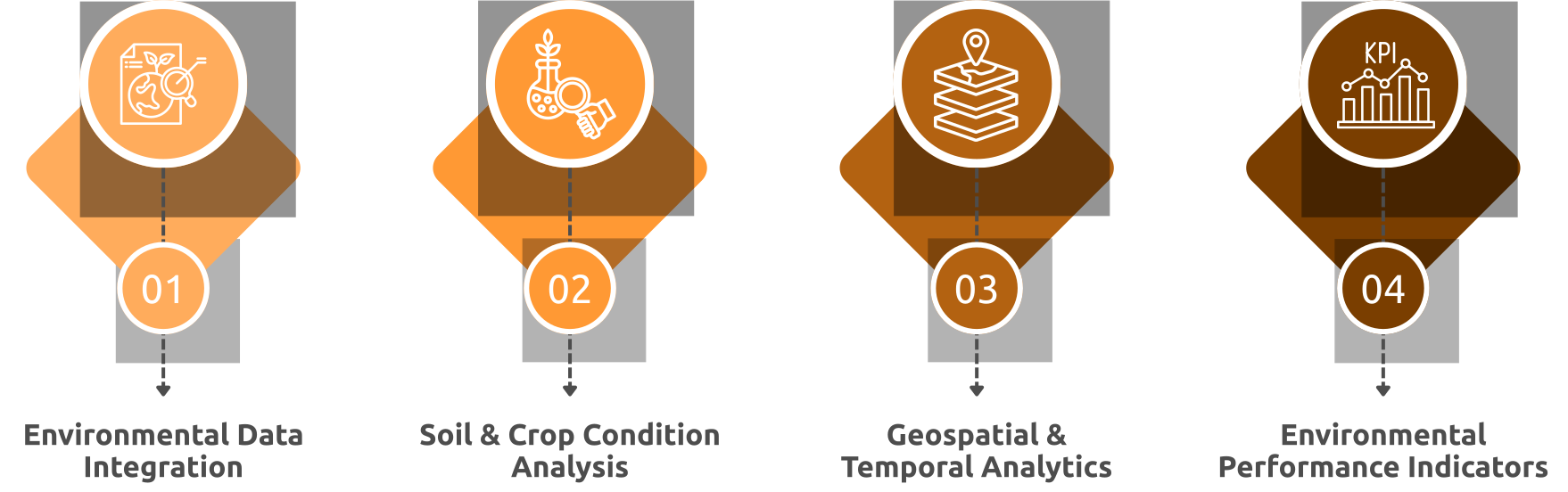
From Environmental Monitoring to Performance Assessment
Environmental observations become more valuable when interpreted in relation to agricultural activities and changes over time. By connecting environmental conditions with operational records, farmB supports the assessment of how farming practices influence soil, crop and broader environmental performance, providing evidence for improved management and carbon-related analysis.
Environmental and geospatial data transformed into field-level information for understanding conditions, variability and change over time.
Decision Intelligence
Decision Intelligence transforms integrated agricultural data into actionable guidance for the planning and management of farming systems. By combining operational information, environmental analytics and analytical models, farmB supports the evaluation of alternatives, the optimization of practices and the implementation of data-driven decisions in the field.
From Data to Action
farmB interprets operational, environmental and agronomic information in relation to production objectives, field conditions and management constraints, transforming integrated data into recommendations, prescription maps, operational plans and other forms of actionable guidance that can be implemented directly in agricultural practice.
Key Functionalities
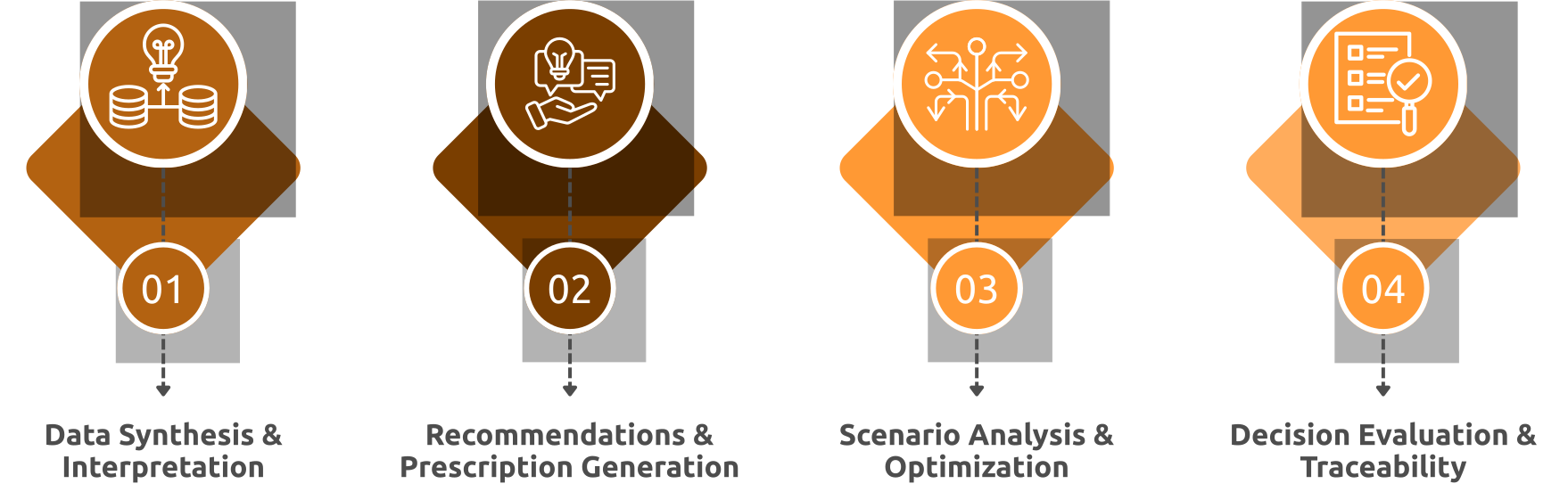
From Analysis to Field Implementation
Decision Intelligence closes the gap between understanding agricultural conditions and acting on them. By linking analytical outputs with operational workflows, farmB supports the transition from interpreted data to practical interventions such as targeted input applications, optimized field activities, sampling plans and other management actions.
Integrated agricultural data transformed into actionable guidance for planning, optimization and field implementation.
Carbon MRV
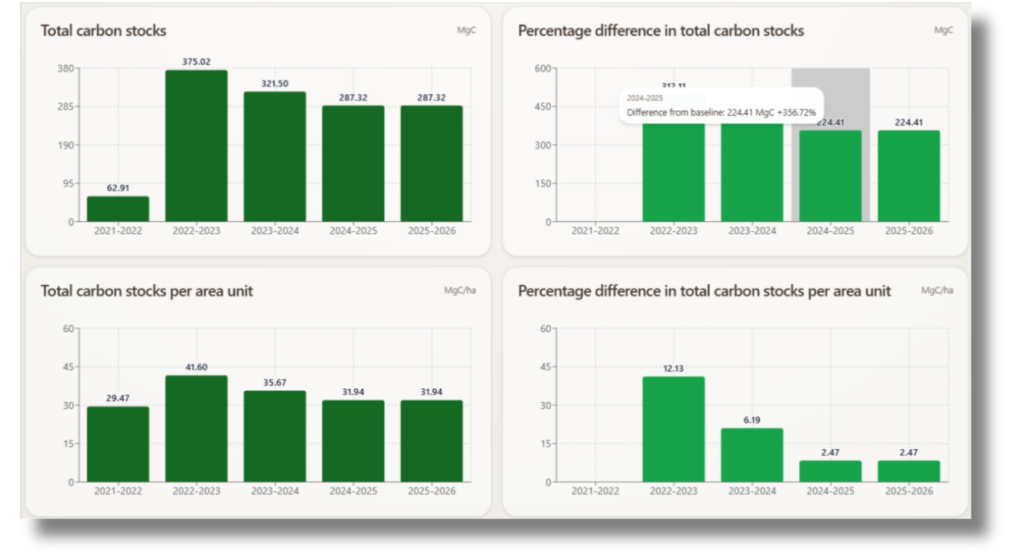
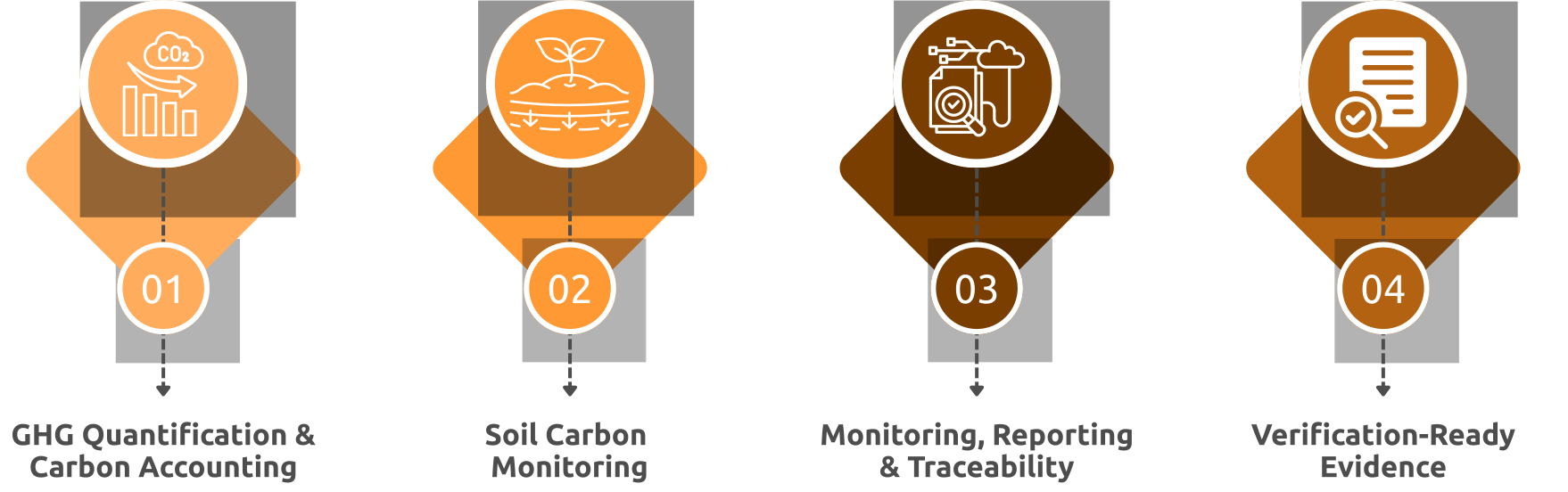
Carbon MRV provides the framework for measuring, quantifying, documenting and reporting carbon-related outcomes in agricultural systems. By combining operational records, environmental measurements, soil carbon information and analytical models, farmB generates structured and traceable evidence that supports carbon accounting, project monitoring and verification processes.
From Farm Data to Carbon MRV
Agricultural carbon performance depends on both what happens in the field and how those activities affect greenhouse gas emissions and soil carbon. farmB combines activity data, input use, soil and environmental measurements, spatial information and analytical methods within a structured MRV workflow, transforming heterogeneous farm data into transparent carbon calculations, monitoring records and verification-ready evidence.
Key Functionalities
From Measurement to Verifiable Carbon Information
Carbon MRV connects agricultural activity records and environmental evidence with transparent calculation, documentation and reporting processes. This enables carbon performance to be followed over time and provides the structured information required for project assessment, corporate reporting and independent verification where applicable.
Operational and environmental evidence combined within a structured workflow for carbon quantification, monitoring and reporting.